Mitochondrial Health
```
6 Signs Your Mitochondria Are Starting to Repair
Most people expect progress to feel obvious. But mitochondrial repair is often subtle, phased, and easy to miss.
```
Most people think mitochondrial repair should feel dramatic: more energy, better workouts, sharper focus, and perfect sleep.
```
But cellular repair is not always loud.
Some of the earliest signs that your mitochondria are adapting can feel subtle, strange, or even confusing. Your sleep may shift. Your muscles may feel sore sooner than expected. Your cravings may change. Your body may feel warmer. Your focus may dip before it improves.
```
That does not always mean something is going wrong. It may mean your body is starting to respond.
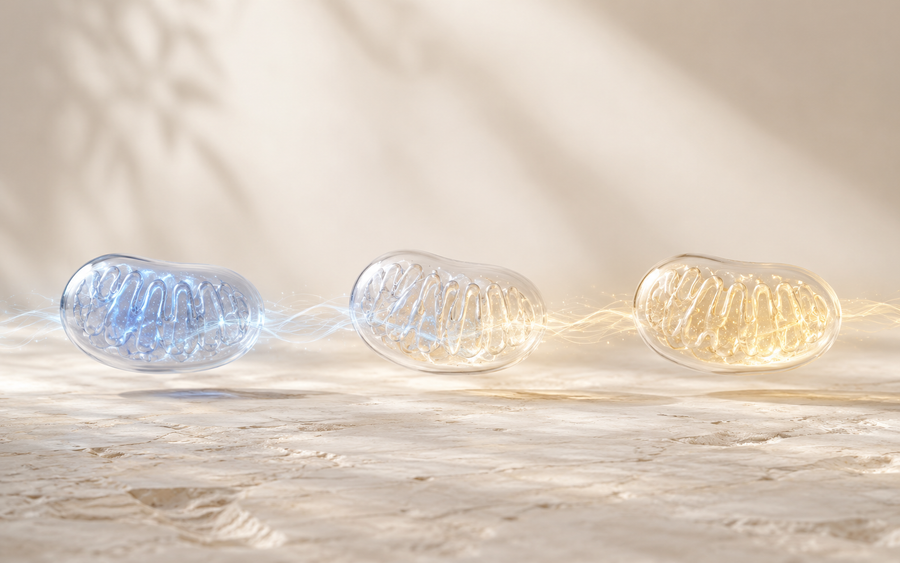
Mitochondria are the energy-producing structures inside your cells. They help convert food and oxygen into usable cellular energy. They also play a major role in recovery, metabolic health, cellular stress response, and long-term performance.
```
Sign 01
Your Hands and Feet Feel Warmer at Rest
One of the most overlooked signs is improved body warmth, especially in the hands and feet.
Many people think cold hands and feet are only a circulation issue. Sometimes circulation is involved, but temperature regulation is also connected to cellular energy production.
Mitochondria help generate heat as they produce energy. When mitochondrial function is under stress, the body may not generate or maintain warmth as efficiently, especially in the extremities.
What to watch for:
- Warmer hands and feet while sitting still
- Better tolerance to cold rooms
- Less need for extra layers
- A more stable body temperature throughout the day
Sign 02
You Get Sore Faster — But Recover Faster Too
This sign can confuse people.
During the early stages of a new training, nutrition, or cellular-health protocol, some people notice that exercise makes them sore faster than expected.
The mistake is assuming this means they are losing fitness. But the key is not only how fast soreness appears. The key is how fast it resolves.
Sore faster. Recover faster.
If you feel sore sooner, but recover faster than before, that may be a sign your body is adapting.
What to watch for:
- Soreness that appears sooner than expected
- Recovery that happens faster than before
- Less lingering fatigue after workouts
- Better performance after a few weeks of consistency
- Improved ability to repeat effort
Sign 03
Your Sleep Pattern Temporarily Changes
Mitochondrial repair is closely connected to sleep. Sleep is when the body performs deep restoration, and it is also when many cellular maintenance processes become more active.
Some people notice temporary changes in sleep as their body adapts. This may include waking briefly during the night and then falling back asleep easily.
The key word is briefly. A short, calm awakening that resolves quickly is very different from true insomnia, racing thoughts, or being unable to fall back asleep.
What to watch for:
- Brief nighttime waking
- Falling back asleep easily
- Waking up feeling rested
- Sleep becoming deeper over time
- More consistent morning energy
Sign 04
Brain Fog May Show Up Before Mental Clarity
This is one of the most misunderstood signs. People often expect better mitochondrial health to immediately create better focus. But during early adaptation, some people experience the opposite: temporary brain fog.
That can feel frustrating. You are doing the right things — eating better, exercising, sleeping more, taking supportive nutrients — but your thinking feels slightly slower.
This does not always mean the protocol is failing. It may mean your body is prioritizing repair and adaptation in phases.
Sometimes clarity comes after the fog.
What to watch for:
- Slightly slower word recall
- More afternoon mental fatigue
- Lower cognitive stamina for a short period
- Improved clarity after consistency
- Better focus once recovery improves
Sign 05
Your Skin Looks Better Before Your Body Changes
Mitochondrial health does not only affect energy. It affects how cells manage stress, repair damage, and maintain normal function. Skin cells are no exception.
Some people notice that their skin begins looking healthier before they see major changes in weight, body composition, or performance.
This can show up as better texture, improved hydration, a more rested appearance, or a subtle glow.
What to watch for:
- Better skin texture
- Less dullness
- Improved hydration
- Faster recovery from minor irritation
- A healthier-looking complexion
Sign 06
Your Cravings Start to Change
This may be the most powerful sign.
At first, cravings often feel like a willpower problem. Sugar. Bread. Snacks. Sweet drinks. Fast fuel.
But cravings are not only psychological. They are also biological signals. When the body struggles to produce steady energy, it may push harder for quick-burning fuel.
As your metabolic flexibility improves, those cravings may begin to quiet. You may still enjoy sugar or carbs, but the urgent pull becomes weaker.
You are not white-knuckling it. You simply do not feel the same demand.
What to watch for:
- Less intense sugar cravings
- Fewer afternoon snack crashes
- More interest in protein-rich meals
- More satisfaction from whole foods
- Less urgency around refined carbohydrates
```
The Repair Timeline: Why the Order Matters
```
These signs do not always show up at the same time. They often appear in phases.
Early Phase: Weeks 1–2
You may notice temperature changes, early soreness, and faster recovery.
Middle Phase: Weeks 2–4
Sleep may shift. Brain fog may appear temporarily. Recovery may continue improving.
Later Phase: Weeks 4–8+
Skin, energy stability, focus, and cravings may begin changing more noticeably.
```
How to Track Mitochondrial Progress
```
You do not need complicated testing to notice early changes. Once a week, rate these on a scale of 1 to 5:
-
Body warmth: Are your hands and feet warmer at rest?
-
Recovery: Are you bouncing back faster after workouts?
-
Sleep: Are you waking more rested?
-
Focus: Is your mental clarity improving over time?
-
Skin: Does your skin look healthier or less dull?
-
Cravings: Are sugar and snack cravings becoming quieter?
Do this for 8 weeks. The weekly trend will tell you more than how you feel on any single day.
```
What Supports Mitochondrial Repair?
```
Mitochondrial health is built through consistent signals. The foundations matter most:
- Resistance training
- Zone 2 cardio
- Quality sleep
- Protein-rich nutrition
- Fiber-rich whole foods
- Hydration and electrolytes
- Sunlight and circadian rhythm support
- Reducing excess alcohol and ultra-processed foods
- Nutrients that support cellular energy and mitochondrial quality control
One important concept is mitophagy.
Mitophagy is the body’s natural process of clearing damaged or inefficient mitochondria so healthier mitochondria can function more effectively.
This is one reason Urolithin A has become an important compound in mitochondrial-health research. Urolithin A is studied for its role in supporting mitophagy, cellular renewal, and muscle-related mitochondrial function.
```
The Bottom Line
```
Mitochondrial repair is not always dramatic.
Sometimes it feels like warmer hands. Sometimes it feels like better recovery. Sometimes it feels like a temporary dip before better clarity. Sometimes it feels like deeper sleep. Sometimes it feels like cravings finally getting quieter.
Most people miss these signs because they expect progress to feel linear.
The goal is not just more energy. The goal is better cellular efficiency.
```
Mitogenex
```
Support Cellular Energy From the Inside Out
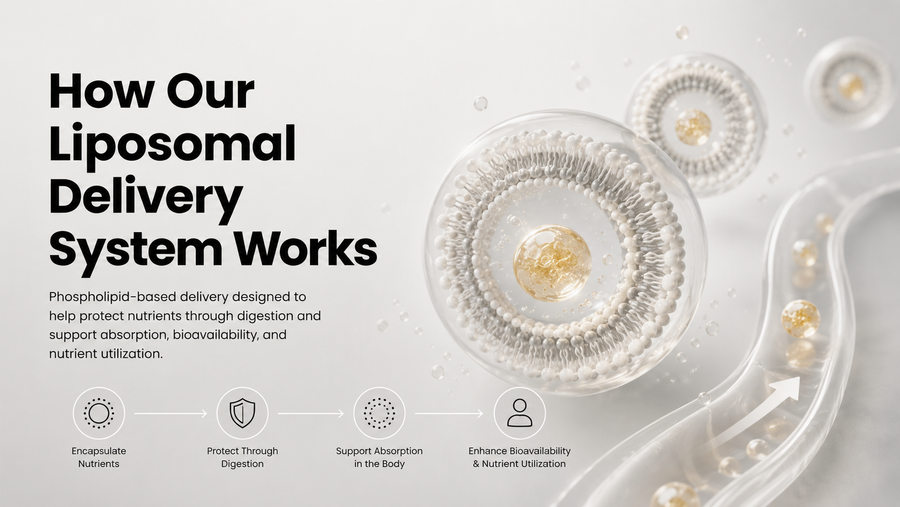
Mitogenex Liposomal Urolithin A is designed to support mitochondrial health, cellular renewal, and healthy aging through advanced liposomal delivery.
If you are focused on energy, recovery, and long-term cellular performance, Urolithin A may be one of the most important mitochondrial-support nutrients to understand.
Explore Mitogenex Liposomal Urolithin A →
```
Disclaimer: These statements have not been evaluated by the Food and Drug Administration. This product is not intended to diagnose, treat, cure, or prevent any disease. Always consult your healthcare professional before starting any new supplement, especially if you are pregnant, nursing, taking medication, or managing a medical condition.
6 Signs Your Mitochondria Are Starting to Repair (Most People Miss These)
Mitochondrial Health
```6 Signs Your Mitochondria Are Starting to Repair
Most people expect progress to feel obvious. But mitochondrial repair is often subtle, phased, and easy to miss.
```Most people think mitochondrial repair should feel dramatic: more energy, better workouts, sharper focus, and perfect sleep.
```But cellular repair is not always loud.
Some of the earliest signs that your mitochondria are adapting can feel subtle, strange, or even confusing. Your sleep may shift. Your muscles may feel sore sooner than expected. Your cravings may change. Your body may feel warmer. Your focus may dip before it improves.
```That does not always mean something is going wrong. It may mean your body is starting to respond.
Mitochondria are the energy-producing structures inside your cells. They help convert food and oxygen into usable cellular energy. They also play a major role in recovery, metabolic health, cellular stress response, and long-term performance.
Sign 01
Your Hands and Feet Feel Warmer at Rest
One of the most overlooked signs is improved body warmth, especially in the hands and feet.
Many people think cold hands and feet are only a circulation issue. Sometimes circulation is involved, but temperature regulation is also connected to cellular energy production.
Mitochondria help generate heat as they produce energy. When mitochondrial function is under stress, the body may not generate or maintain warmth as efficiently, especially in the extremities.
What to watch for:
Sign 02
You Get Sore Faster — But Recover Faster Too
This sign can confuse people.
During the early stages of a new training, nutrition, or cellular-health protocol, some people notice that exercise makes them sore faster than expected.
The mistake is assuming this means they are losing fitness. But the key is not only how fast soreness appears. The key is how fast it resolves.
Sore faster. Recover faster.
If you feel sore sooner, but recover faster than before, that may be a sign your body is adapting.
What to watch for:
Sign 03
Your Sleep Pattern Temporarily Changes
Mitochondrial repair is closely connected to sleep. Sleep is when the body performs deep restoration, and it is also when many cellular maintenance processes become more active.
Some people notice temporary changes in sleep as their body adapts. This may include waking briefly during the night and then falling back asleep easily.
The key word is briefly. A short, calm awakening that resolves quickly is very different from true insomnia, racing thoughts, or being unable to fall back asleep.
What to watch for:
Sign 04
Brain Fog May Show Up Before Mental Clarity
This is one of the most misunderstood signs. People often expect better mitochondrial health to immediately create better focus. But during early adaptation, some people experience the opposite: temporary brain fog.
That can feel frustrating. You are doing the right things — eating better, exercising, sleeping more, taking supportive nutrients — but your thinking feels slightly slower.
This does not always mean the protocol is failing. It may mean your body is prioritizing repair and adaptation in phases.
Sometimes clarity comes after the fog.
What to watch for:
Sign 05
Your Skin Looks Better Before Your Body Changes
Mitochondrial health does not only affect energy. It affects how cells manage stress, repair damage, and maintain normal function. Skin cells are no exception.
Some people notice that their skin begins looking healthier before they see major changes in weight, body composition, or performance.
This can show up as better texture, improved hydration, a more rested appearance, or a subtle glow.
What to watch for:
Sign 06
Your Cravings Start to Change
This may be the most powerful sign.
At first, cravings often feel like a willpower problem. Sugar. Bread. Snacks. Sweet drinks. Fast fuel.
But cravings are not only psychological. They are also biological signals. When the body struggles to produce steady energy, it may push harder for quick-burning fuel.
As your metabolic flexibility improves, those cravings may begin to quiet. You may still enjoy sugar or carbs, but the urgent pull becomes weaker.
You are not white-knuckling it. You simply do not feel the same demand.
What to watch for:
The Repair Timeline: Why the Order Matters
```These signs do not always show up at the same time. They often appear in phases.
Early Phase: Weeks 1–2
You may notice temperature changes, early soreness, and faster recovery.
Middle Phase: Weeks 2–4
Sleep may shift. Brain fog may appear temporarily. Recovery may continue improving.
Later Phase: Weeks 4–8+
Skin, energy stability, focus, and cravings may begin changing more noticeably.
How to Track Mitochondrial Progress
```You do not need complicated testing to notice early changes. Once a week, rate these on a scale of 1 to 5:
Do this for 8 weeks. The weekly trend will tell you more than how you feel on any single day.
```What Supports Mitochondrial Repair?
```Mitochondrial health is built through consistent signals. The foundations matter most:
One important concept is mitophagy.
Mitophagy is the body’s natural process of clearing damaged or inefficient mitochondria so healthier mitochondria can function more effectively.
This is one reason Urolithin A has become an important compound in mitochondrial-health research. Urolithin A is studied for its role in supporting mitophagy, cellular renewal, and muscle-related mitochondrial function.
```The Bottom Line
```Mitochondrial repair is not always dramatic.
Sometimes it feels like warmer hands. Sometimes it feels like better recovery. Sometimes it feels like a temporary dip before better clarity. Sometimes it feels like deeper sleep. Sometimes it feels like cravings finally getting quieter.
Most people miss these signs because they expect progress to feel linear.
The goal is not just more energy. The goal is better cellular efficiency.
```Mitogenex
```Support Cellular Energy From the Inside Out
Mitogenex Liposomal Urolithin A is designed to support mitochondrial health, cellular renewal, and healthy aging through advanced liposomal delivery.
If you are focused on energy, recovery, and long-term cellular performance, Urolithin A may be one of the most important mitochondrial-support nutrients to understand.
Explore Mitogenex Liposomal Urolithin A →
```Disclaimer: These statements have not been evaluated by the Food and Drug Administration. This product is not intended to diagnose, treat, cure, or prevent any disease. Always consult your healthcare professional before starting any new supplement, especially if you are pregnant, nursing, taking medication, or managing a medical condition.